

My brother and I were going over the numbers at the store recently. Routine review. Then we noticed something that swung the conversation.
Clients were using credit cards to start the washers and dryers.
Not wash and fold. Not pickup and delivery. The self-service machines. We said this isn’t good, this is a trend we need to watch closely.
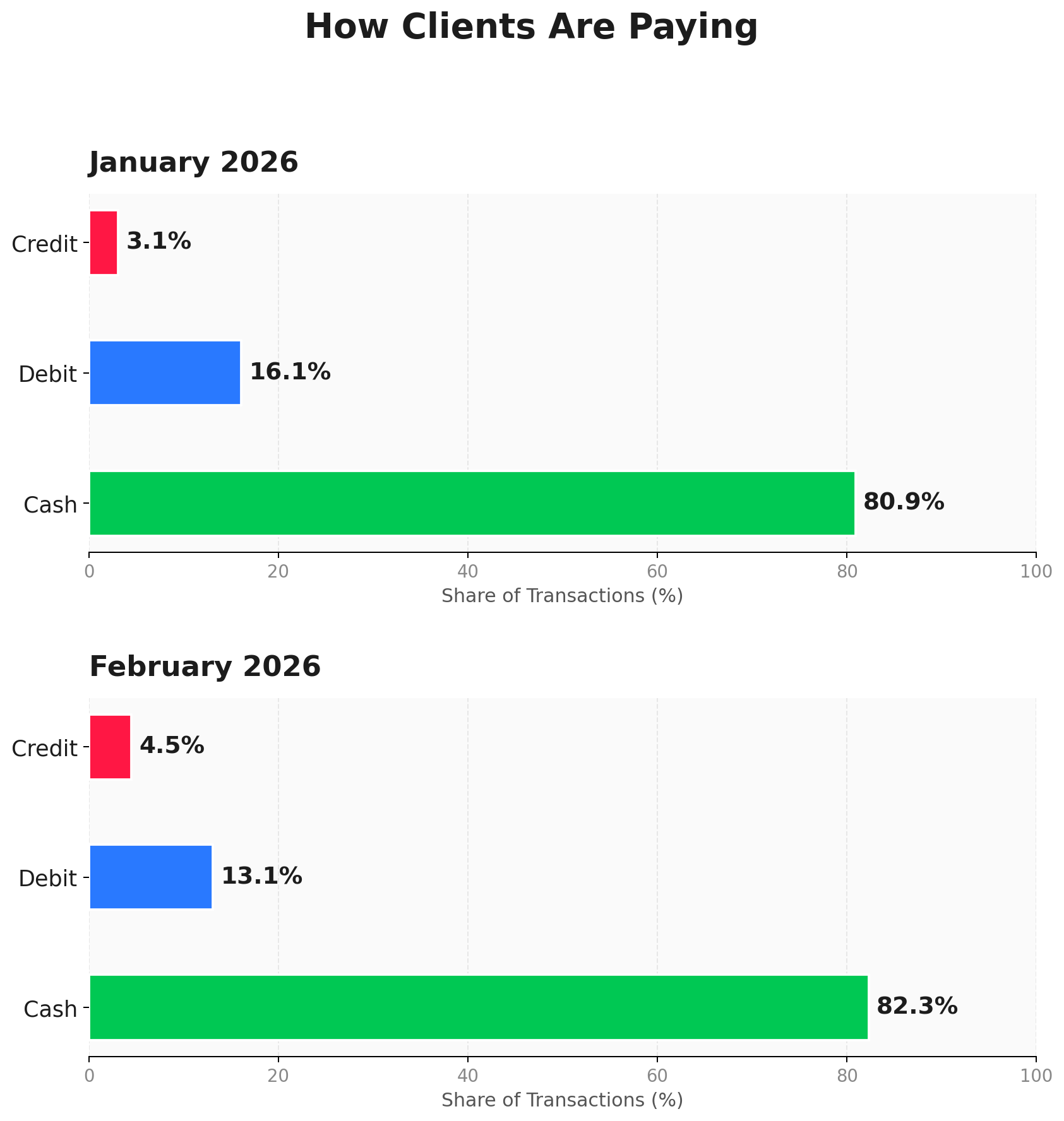
In January, 3.1% of transactions at the mat were paid by credit card. In February, that number climbed to 4.5%. Cash remained dominant. But credit was moving in one direction.
Before we go further, context matters. This is one store, in one market. A mat in different types of communities will show different, transaction volumes than one in another market. That's why percentages matter more than raw numbers here. The share tells the story.
And the story is worth paying attention to.
The Assumption We've Been Leaning On
There's a belief that runs through our industry like a law of physics.
"People always need clean clothes."
It's somewhat true. But it's not a complete thought. And incomplete thinking is exactly where industries get caught off guard.
People want clean clothes, but they don't necessarily need your laundromat to get them clean. And when financial pressure builds long enough, people are remarkably creative about finding another way.
What Other Industries Learned the Hard Way
Fast food built its entire identity around being affordable. That was the whole value proposition. Then, between 2019 and 2024, menu prices rose 33% above pre-pandemic levels.¹ McDonald's reported its first global same store sales decline in 13 quarters.² Households earning under $50,000 didn't complain loudly. They just started cooking at home instead. They didn't go hungry. They adapted.
Cable TV had 88% household penetration at its peak.³ Nearly nine out of ten American homes were paying for it. The industry raised prices year after year, assuming the product was essential enough that people would absorb whatever came. By 2024, penetration had dropped below 50%.⁴ When researchers asked cord cutters why they left, 86.7% cited price as the primary reason.⁵ They didn't stop watching television. They found a cheaper (better) way for them to do it.
The pattern in both cases is identical. Consumers didn't go without. They adapted. And the industries that assumed "essential" meant "captive" found out otherwise.
What the Consumer Data Is Actually Saying
The median household income of a laundromat client is $28,000 a year.⁶
Sit with that number for a moment. That's who we serve. And right now, that household is under more financial pressure than it has been in over a decade.
In the third quarter of 2024, the share of active credit card holders making only the minimum payment hit 10.75%, the highest level recorded