
I was in one of our stores a couple days ago and watched something that's been bothering me since.
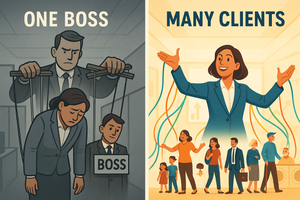
Team members on their phones while clients walked in. No greeting. No acknowledgment. Carts piled up at the door instead of lined up and ready. Earpieces in, personal conversations happening while orders were getting processed.
I thought, if this is what attended looks like, the store might as well be unattended.
I don't have anything against unattended stores. That's a legitimate model. But I've always believed that having an attendant gives you an advantage. You can intercept problems. You can create connection. You can turn a transaction into an experience.
But what I watched that day? That wasn't an advantage. That was a liability wearing a name tag.
The gap between what your store makes and what more it could make might be standing behind the counter scrolling on their phone.
This isn't an attended versus unattended debate. That argument been done to death and I have no desire to participate in it. This is about what happens when you choose attended but don't actually commit.
The Ceiling You Can't See
Here's what many owners/operators miss. Their revenue isn't declining so they are content. But, what about the revenue you could be capturing.
Research from the Qualtrics XM Institute found that 51% of consumers reduce or stop spending after a single negative interaction.¹ One bad experience and half your potential repeat business gone.
But here's the part that keeps me and should keep you up at night. Only 4% of unhappy customers actually complain.² The other 96% just leave. They don't post a bad review. They don't ask for a manager. They walk out, and they don't come back.
We’ll never know why.
That client who looked confused while your attendant was on their phone? She didn't complain. She just decided this wasn't the place for her. The guy who waited at the counter while your team member finished a personal call? He found somewhere else.
Your P&L doesn't show "revenue we should have captured but didn't." It just shows what you made. The ceiling stays invisible.
What Committed Actually Looks Like
Costco isn't the first company you think of when you think hospitality. Warehouse retail, bulk toilet paper, membership cards, etc.
But here's what many don't know. Costco generates $850,000 in revenue per employee. The industry average is $350,000.³ They pay their employees 35% more than Sam's Club and beat them on every single productivity metric.⁴
Their turnover rate is 12%. Retail industry average is 60-70%.⁵
But here's what actually drives those numbers. Costco trains managers to "greet before delegating." Before asking an employee to do anything, acknowledge them as a person first. And on the warehouse floor, employees don't wait for members to ask questions. They proactively approach people to suggest products, explain why something might be a good fit, anticipate needs before they're expressed.
They invest more in their people and get more back. It's not theory, it’s data.
Chick-fil-A you probably know. $9.3 million for stand-alone locations, the highest in fast food.⁶ Closed on Sundays, and they still dominate. The "my pleasure" response isn't a script employees memorize. It's a behavior trained into a culture where the franchise acceptance rate is less than 1%, harder to get into than Stanford.⁷
Will Guidara took a struggling two star restaurant called Eleven Madison Park and turned it into the #1 restaurant in the world.⁸ How? He asked his team to be present with guests.
Guidara identified 120 different touchpoints where his team could create positive moments during a three hour dinner. Not reactive service where you wait for problems. Proactive hospitality where you're looking for opportunities to exceed expectations before anyone asks.
That's commitment. That's what attended should mean and look like.
What It Looks Like in a Laundromat
I've known Sharon and Steve Brinks from The Laundry Station in Wichita, KS, for years. I visited their stores during a Laundry Cares event. Their team members are in uniforms. They greet clients at the door. When someone looks confused, a team member walks over before they have to ask for help.
That's the bar. Not perfect. Just present.
Now think about your store. Does your attendant notice when someone's struggling? Do they intercept problems before they escalate? Or are they finding out about issues when the client's already frustrated?
What We Had to Fix
We had to institute a no-phone policy at one of our VIP Bubbles locations. Not "phones are okay sometimes." No phones. Period.
Here's what I saw on the last visit. Team members on their phones while clients walked in pushing carts. No greeting. No acknowledgment. The outdoor carts we line up neatly at the front? Piled up by the door because nobody was paying attention. The larger carts pushed to the side, disorganized.
Team members wearing earpieces, talking on personal calls while tagging machines, sorting clothes, folding orders, packing bags. That's exactly how mistakes happen.
Clients walking up to the counter and having to wait because the team member was on a personal call. And here's something we hadn't considered until we saw it, when they're wearing an earpiece and talking to someone on the phone while also talking to a client or a vendor, whoever's on that call can hear the whole conversation. That's a privacy issue.
The policy wasn't about phones. It was about presence and attention.
Three Modes of Attendant
Think about it as a spectrum.
Proactive attendant means you're scanning for opportunities. You see a client hesitate near the soap dispenser and you're already walking over. You notice the folding tables getting cluttered and you clear them before anyone has to work around the mess. You're ahead of problems, not behind them.
Reactive attendant means you'll help if asked. You're present, you're available, but you're waiting for someone to need you. It's not terrible. But it's not creating value either.
Absent attendant means you're physically there but checked out. Scrolling your phone. Chatting with coworkers. Wearing earbuds. Clients can see you, which actually makes it worse than an empty store. An empty store sets no expectations. A staffed store with a disengaged attendant sets expectations and then violates them.
The jump from reactive to proactive is where the money is. But many owner/operators don't even realize or don’t care they're in the absent mode.
The Question Worth Asking
What would your revenue look like if your attendants performed like Costco employees? Like Sharon and Steve's team? Like a Chick-fil-A crew?
You might be doing okay or even good. But that could be masking what you're leaving on the table.
Thinking about the thinking of laundry:
When you realize that having someone in your laundromat isn't the same as having someone present in your laundromat.
The Real Choice
The choice isn't attended versus unattended. That's the wrong frame.
The choice is committed or not committed to your model.
If you're going to attend, attend like you mean it. Half-measures don't create half-results. They create invisible ceilings that cap your growth while you wonder why the store down the street is busier.
That's all I got for you today.
Waleed
PS: PRESSED: A private network for serious laundry operators who are done with the noise. Invite only. Sign up to get notified when applications open: joinpressed.com
Echoing the thoughts of Jim Sinegal.
It doesn't do much good to have a quality image, whether it's with the facility or whether it's with the merchandise, if you don't have real quality people taking care of your customers.
Share these insights
Did you enjoy this editorial? Forward it to colleagues and friends so they can subscribe. Was this editorial forwarded to you? Sign up for it here.
Footnotes:
¹ Qualtrics XM Institute, "Bad Customer Service Threatens $3.7 Trillion Annually," 2024
² Ruby Newell-Legner, "Understanding Customers," via Help Scout Customer Service Statistics
³ MMCG Invest, "Costco Wholesale's U.S. Operations in 2025," 2025
⁴ U.S. News & World Report, "Jim Sinegal: Costco CEO Focuses on Employees," 2009
⁵ U.S. News & World Report, "Jim Sinegal: Costco CEO Focuses on Employees," 2009 – Costco turnover 12% vs. retail industry average 60-70%
⁶ QSR Magazine, "Chick-fil-A's Sales Surpassed $22 Billion in 2024," May 2025
⁷ Franchise Business Review, "Chick-fil-A May Be the Hardest Franchise to Buy Into," 2021